

Whereas working as a monetary advisor could be engaging primarily based on the power to make a optimistic distinction in shoppers’ lives, on the finish of the day it’s a enterprise and the supply of a agency proprietor’s livelihood. Amidst this backdrop, it’s essential for agency house owners to pay shut consideration to their profitability, because it not solely helps decide their current-year revenue but additionally can function a buffer in opposition to antagonistic occasions (reminiscent of a significant market downturn, a shopper lawsuit, or a regulatory motion) that would massively disrupt the enterprise.
On this visitor submit, Matthew Jarvis and Micah Shilanski, who now coach advisors by means of The Good RIA platform primarily based on practices they efficiently carried out in their very own companies, focus on how advisors can measure their true profitability, create a client-by-client income report, and decide when it’s time to ‘graduate’ shoppers who’re not an excellent match (in addition to learn how to method this tough dialog).
To calculate their profitability, a agency proprietor can begin by figuring out their “True Gross”, or the entire amount of cash paid by shoppers, which incorporates not solely monetary planning charges, but additionally funding charges, platform charges, fund bills, and so forth. (to get an image of the entire quantity a shopper is keen to pay for the stack of companies the advisor provides). Subsequent, the advisor can calculate their “True Web”, which is all the cash that flows by means of to the advisor’s tax return from their observe (which may very well be some mixture of wages, income, proprietor’s distributions, assured funds, and so forth). Lastly, the proprietor can decide their profitability by dividing their True Web by their True Gross, aiming for at the very least 30% profitability – with 50% being excellent.
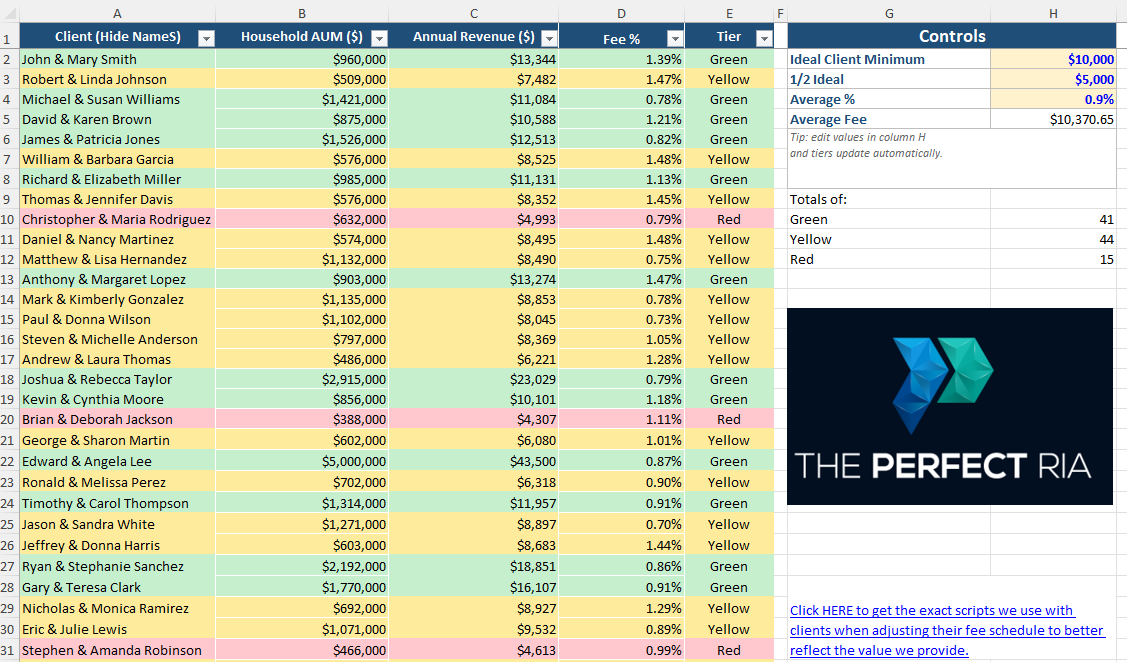
With a profitability determine in hand, agency house owners can subsequent use a “Purple/Yellow/Inexperienced report” to kind their shopper base by income and establish shoppers who aren’t assembly the agency’s revenue-per-client targets. This train includes itemizing all shopper households, all revenues collected for every family during the last 12 months, and the belongings managed by the agency. After figuring out the (excellent and reasonable) per-client income goal that they wish to attain, the advisor can then higher establish these whose revenues already meet the specified goal (“inexperienced” shoppers), those that fall between the best shopper income determine and one-half of this quantity (“yellow” shoppers), and people whose revenues fall under one-half of the best quantity.
“Inexperienced” shoppers are excellent and can be good candidates to stay with the agency going ahead. “Yellow” shoppers could be given an ‘improve or graduate’ dialogue, the place they’re given the chance to pay a charge that higher displays the worth the advisor offers – or to search out an advisor higher suited to their wants. “Purple” shoppers, with few exceptions (e.g., retaining 5 of those shoppers for each 100 within the agency’s shopper base), get placed on the ‘commencement’ listing, with the advisor providing a selected and genuine rationale for not with the ability to serve them and offering a means for them to search out an advisory residence that higher matches their scenario.
In the end, the important thing level is that whereas it may be tempting for agency house owners to imagine that they’ve wholesome profitability (notably when market efficiency is robust and buoys charges), it’s a invaluable observe to take inventory of the agency’s true profitability – to make sure ample cushion to guard in opposition to future contingencies, and to establish methods to extend revenue margins into the long run.

